Beginner Guide
How to Play Pickleball: Your First Game Guide
Learn the court, the serve, the kitchen, and the score so you can join a game without feeling lost.
Updated September 27, 2026 · 12 minute read
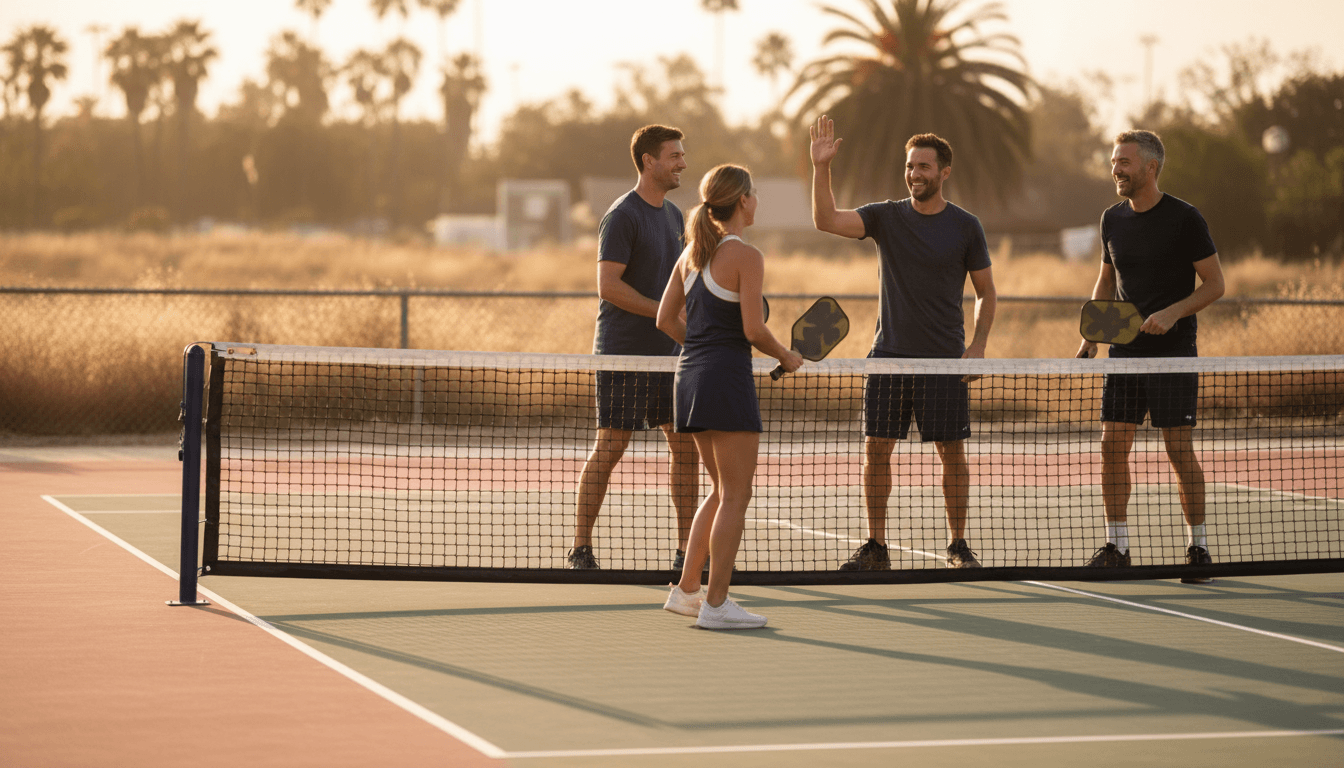
Pickleball is easy to start once you know the rhythm. Serve across the court, let the first two shots bounce, stay out of the kitchen when you volley, and focus on getting one more ball back.
1. What you are playing
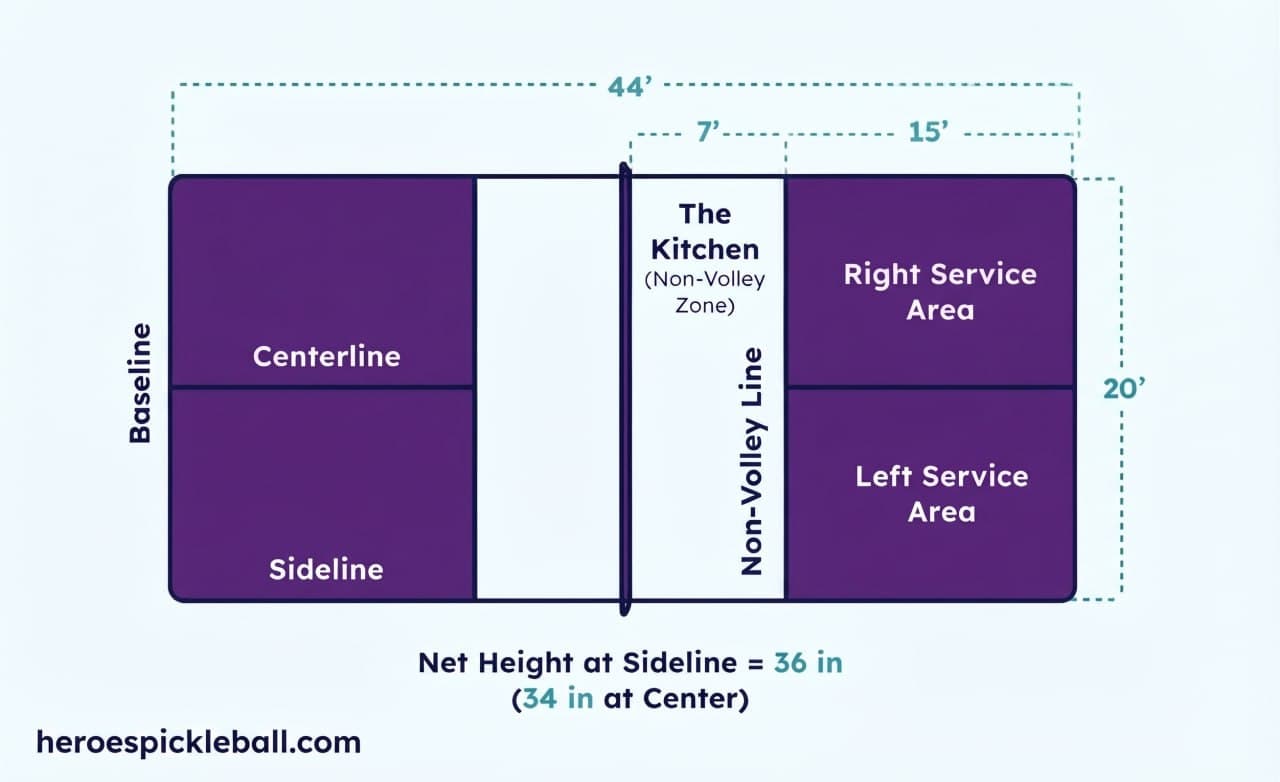
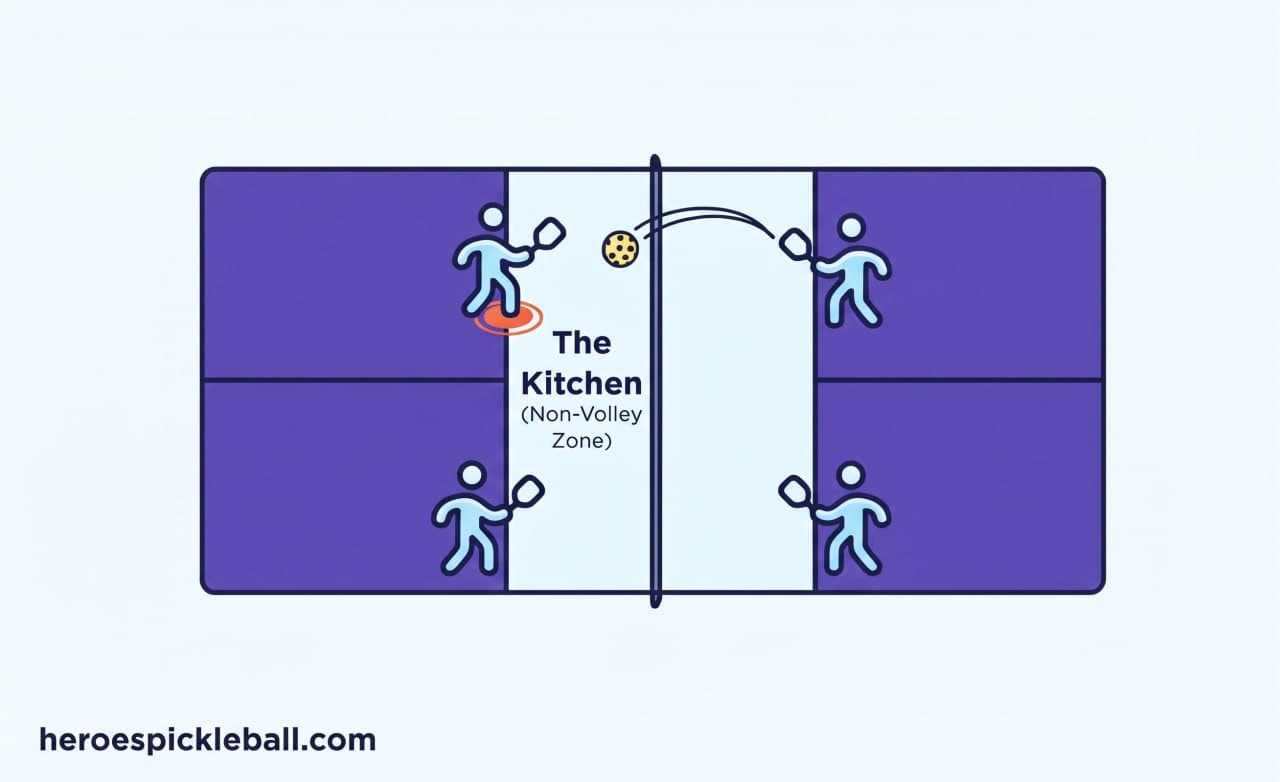
Pickleball is usually played as doubles, though you can play singles too. Both use a 20-by-44-foot court. The net is 36 inches high at the sidelines and 34 inches at center. Each side has a seven-foot non-volley zone called the kitchen.
- Paddle: a rigid paddle; borrowing is fine for a first session.
- Ball: indoor and outdoor balls differ, so use the host’s ball when possible.
- Shoes: court or tennis shoes are best for lateral movement.
2. Read the court
- Baseline: rear boundary; stand behind it to serve.
- Sideline: outside boundary.
- Centerline: divides left and right service courts.
- Kitchen line: marks the seven-foot non-volley zone.
A ball touching a boundary line is generally in. The serve exception: a serve on the kitchen line is short and a fault. You may stand in the kitchen and hit a ball after it bounces. You can stand in the kitchen after the ball bounces. You just cannot volley while touching it or its line.
3. Start with a legal serve
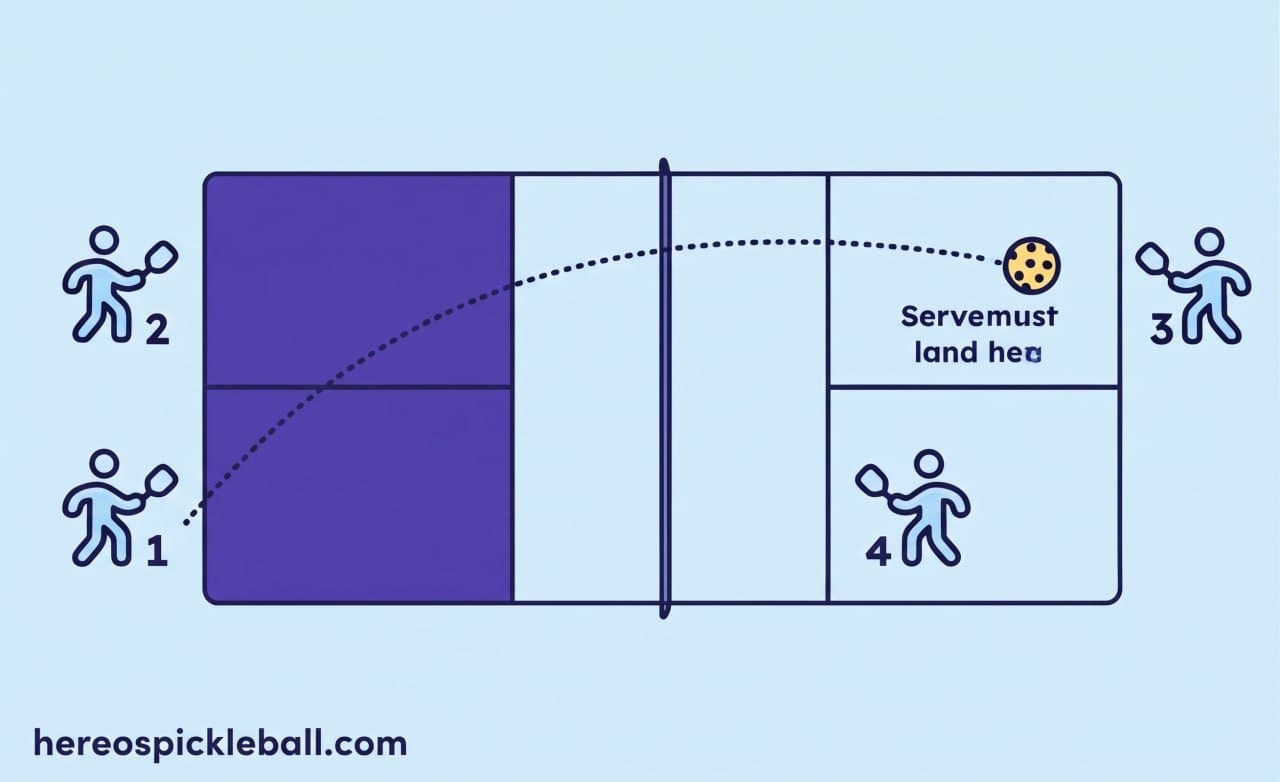
Serve diagonally into the opposite service court from behind the baseline. For a conventional volley serve, the arm moves upward, contact is below the waist, and the paddle head is not above the highest part of the wrist at contact. A legal drop serve is also permitted. At contact, do not touch the baseline or imaginary sideline/centerline extensions; keep at least one foot behind the baseline. You get one attempt, so start with a calm serve that lands in the correct box.
4. The first two shots must bounce
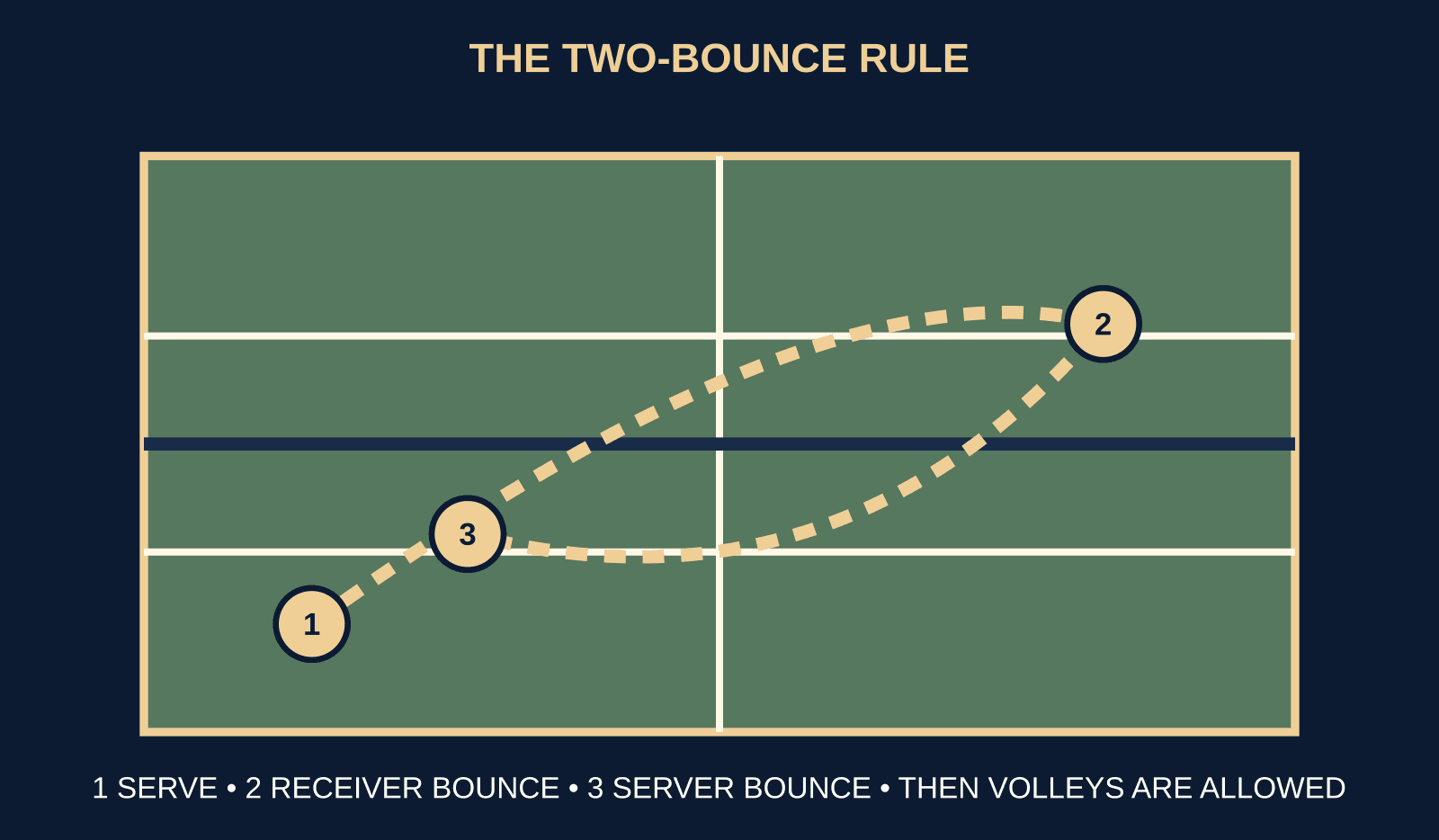
- The receiver lets the serve bounce before returning it.
- The serving team lets that return bounce before playing it.
- After one bounce on each side, either team may volley or hit groundstrokes.
This rule gives both teams time to get into the rally before anyone starts volleying.
5. Kitchen rules
A volley is hit before the ball bounces. You may volley from outside the kitchen, but not while touching the kitchen or its line. It is also a fault if momentum from a volley carries you,or anything you are wearing or carrying,into the kitchen afterward. You may enter the kitchen to play a ball that has bounced; a controlled soft shot there is a dink.
6. Traditional doubles scoring
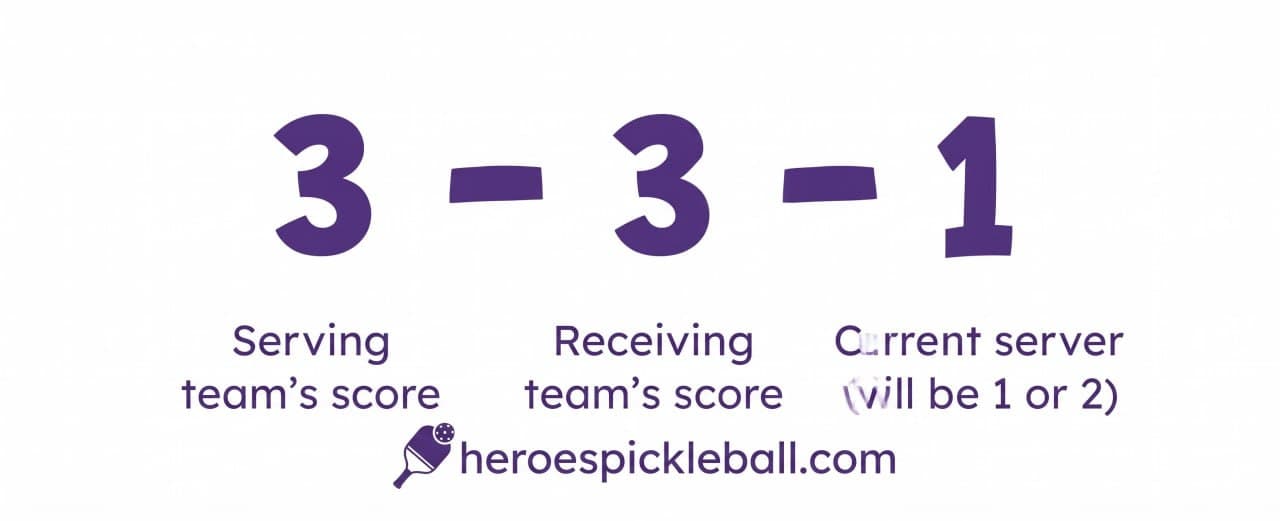
Most casual doubles games use side-out scoring: only the serving team scores. Games commonly go to 11, win by two; some events use 15 or 21. Call three numbers before serving: serving score, receiving score, and server number. In 4-2-1, the serving team has four, the receiving team has two, and the first server is serving.
A serving-team rally win scores a point and the server switches sides. A serving-team fault moves the serve to the entitled partner; a later fault produces a side out. At the start of a new game, the opening team has one service turn. The player who first served for a doubles team is on the right with an even score and left with an odd score. Some events use rally scoring, where every rally awards a point,ask before the game starts so everyone is using the same format.
In singles, the server serves from the right with an even score and left with an odd score.
7. Faults and line calls
A fault stops play because of a rule violation. In side-out scoring, a receiving-team fault gives the serving team a point; a serving-team fault costs a service turn or produces a side out.
- a serve outside the diagonal service court, in the net, or on the kitchen line
- a return or rally ball into the net or out of bounds
- a volley before the required first bounce on each side
- a kitchen volley, touching the kitchen line while volleying, or entering the kitchen from volley momentum
- letting the ball bounce twice
- touching the net or post with a player, clothing, or paddle while the ball is live
- a service-rule violation
- a live ball striking a player, something worn/carried, or a permanent object before it bounces in the court
Make honest line calls. If you did not clearly see a ball out, treat it as in.
8. Useful shot vocabulary
- Serve: starts the rally.
- Return: the receiver’s reply after the serve bounces.
- Groundstroke: a ball struck after it bounces.
- Volley: a ball struck before it bounces, from outside the kitchen.
- Dink: a controlled soft shot intended near the opponent’s kitchen.
- Third-shot drop: a soft deeper-court shot intended near the kitchen to help the serving team move forward.
- Drive: a firmer, lower pressure shot.
- Lob: a high shot over opponents; use it carefully.
For a first game, prioritize clearance over the net, control, and placement. Keep your first shots simple. A steady ball in play is more useful than a risky winner attempt.
9. Positioning, etiquette, and a first-session plan
In doubles, start in the correct service court and move with your partner. After the two-bounce sequence, teams often work toward the kitchen line for reach and angles. Use early calls: mine, yours, bounce, and switch. Return loose balls only during a pause and call “ball”; ask how a group rotates before joining; stop for pain, dizziness, or unsafe conditions.
- Identify baseline, service boxes, and kitchen line.
- Practice calm diagonal serves and returns.
- Rehearse the two-bounce sequence.
- Trade gentle dinks after a bounce.
- Play short points while announcing the score.
Keep four things in mind: serve cross court, let the first two shots bounce, do not volley in the kitchen, and in traditional side out scoring only the serving team scores.
Watch the rules in motion
USA Pickleball: key rules
Embedded from the public USA Pickleball YouTube channel. Heroes does not own or claim affiliation with this video.
Briones Pickleball Academy: beginner rules and scoring
Third-party video courtesy of Briones Pickleball Academy, embedded from its public YouTube channel. Heroes does not own, sponsor, or claim affiliation with this video or its promotions.
Pickleheads: serving and rotation basics
Third-party video courtesy of Pickleheads, embedded from its public YouTube channel. Heroes does not own, sponsor, or claim affiliation with this video.